

Participa
Encuentra empleo
Voluntariado
Publica
Buscar
Empresa social / Empresa
Publicado 20/1/26 05:25
Patient Companionship Volunteer
Presencial, La persona voluntaria debe estar en o cerca de Fresno, CA
Descripción
Horarios Disponibles:
Días laborables (durante el día, tardes), Fines de semana (durante el día, tardes)
Flexibilidad:
Flexible
Detalles del Compromiso:
Flexible scheduling based on your availability 1–2 hour visits, typically 2–4 hours per month Initial commitment of 3–6 months One-time volunteer training provided Ongoing support from hospice staff
Frecuencia:
Recurrente
Buscando personas voluntarias:
10
Área de Impacto:
Desarrollo de Comunidades, Salud & Medicina, Adultos Mayores, Voluntariado
Compensación:
Formación incluida
Recomendado para:
Jóvenes, Edad 55+
Requisitos para participación:
Licencia de Conducir, Verificación de antecedentes, Asistir a orientación
Descripción
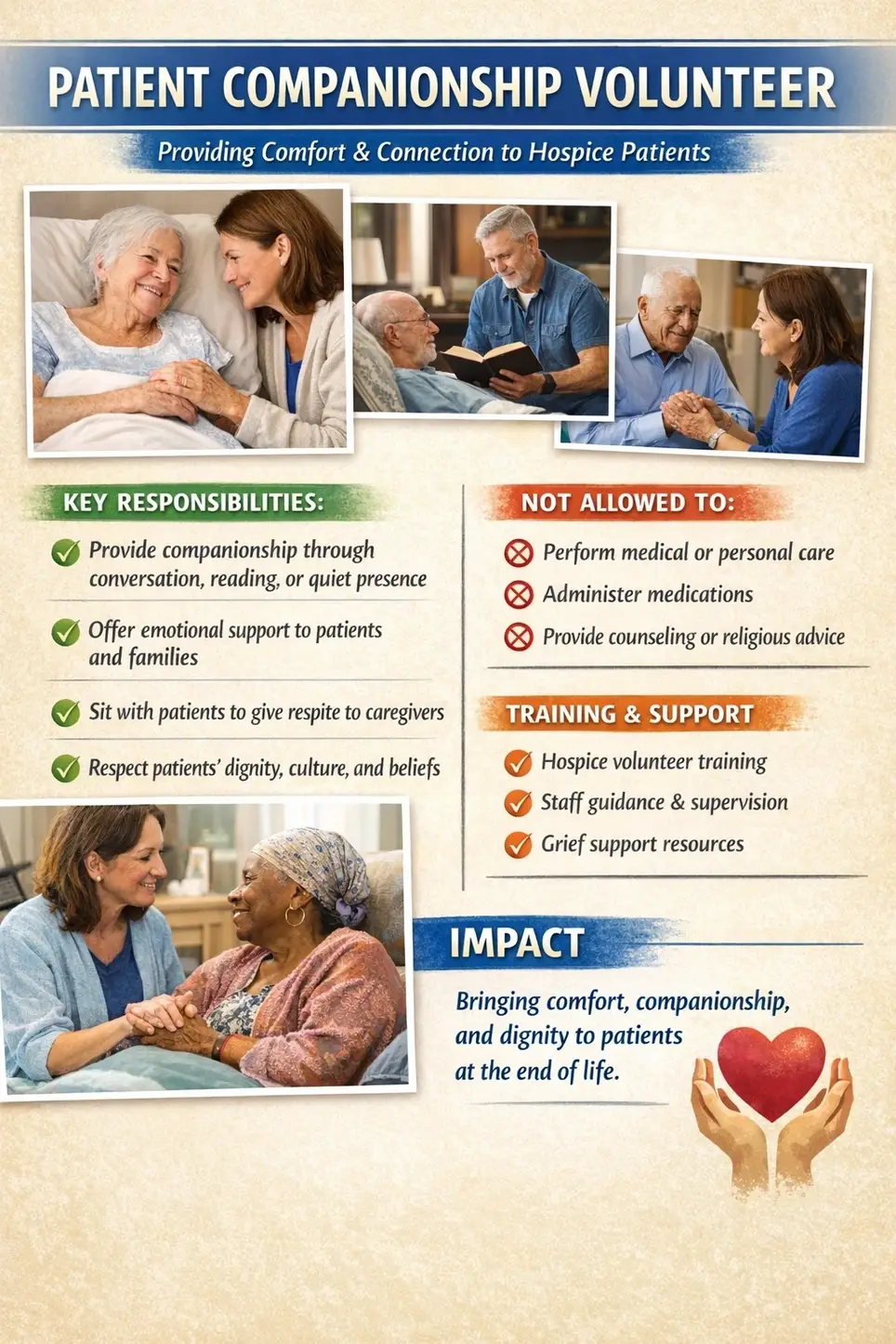
Patient Companionship Volunteers provide non-medical emotional support and presence to hospice patients during end-of-life care. The primary purpose of this role is to enhance quality of life by offering comfort, dignity, and human connection to patients and reassurance to their families.
Key Responsibilities
- Provide companionship through conversation, active listening, reading aloud, or quiet presence
- Offer emotional support to patients and families in a calm, respectful manner
- Sit with patients during periods of rest, reflection, or when family members need respite
- Support patient dignity by honoring personal preferences, culture, and beliefs
- Communicate observations or concerns to hospice staff as appropriate
- Maintain patient confidentiality and adhere to hospice policies and boundaries
What Volunteers Do Not Do
- Provide medical care, personal care, or administer medications
- Perform clinical tasks or replace professional staff
- Offer counseling, advice, or religious instruction unless specifically trained and requested
Qualifications
- Compassionate, reliable, and emotionally mature individuals
- Ability to listen without judgment and respect end-of-life processes
- Comfortable with illness, aging, and death
- Ability to commit to regular visits as agreed upon with hospice staff
- Completion of hospice volunteer training and background screening
Training & Support
- Comprehensive orientation and role-specific training provided
- Ongoing support and supervision from hospice staff
- Access to grief support resources as needed
Impact
Patient Companionship Volunteers play a critical role in ensuring no patient feels alone. Their presence provides comfort, reduces anxiety, and supports both patients and families during one of life’s most meaningful transitions.
Ubicación
Presencial
Valley Regional Home Health & Hospice Care
6311 N Fresno St suite 102, Fresno, CA 93710, USA
Suite 102
Suite 102
Por favor, llena este formulario

Descubre Tu Vocación
Encuentra oportunidades para cambiar el mundo con las últimas oportunidades de empleo, pasantías/prácticas y voluntariado con impacto social. Además, podrás explorar recursos para generar impacto positivo en tu comunidad.
¿Ya eres usuario(a)? Ingresa