

How Can Nonprofit Impact Reports Attract New Volunteers?

There’s no question about the importance of volunteers in nonprofit missions. They’re the backbone of nonprofit organizations; the social-impact sector relies on the energy and passion of its volunteers to complete mission-critical tasks. But in a competitive landscape, how can your organization stand out and attract the support it needs?
The answer lies in your nonprofit’s impact reporting efforts. Impact reports are data-backed documents that detail your organization’s outcomes and achievements, including the holistic effects of your work. A well-crafted report can be the nudge prospective volunteers need to turn from passive observers into active participants.
Let’s review a few ways your nonprofit’s impact reports can attract new volunteers for your mission.
Speak to Volunteers’ Motivations
Impact reports are like a window into your nonprofit’s goals and efforts to achieve them. This view highlights the connection between your organization’s work and prospective volunteers’ interests.
For example, including the following elements in your impact report can make it resonate with potential volunteers’ personal motivations:
- A summary of your mission and vision: An overview of your organization’s mission and vision helps prospective volunteers connect your overarching goals to their personal values and interests, establishing a shared purpose.
- Specific social impact data: According to UpMetrics, demonstrating your nonprofit’s social impact (the positive, negative, intentional, and unintentional effects of your activities on the community) helps maintain public trust. For prospective volunteers, this data reinforces that your organization deserves their support.
- Impact data visualizations: Breaking down impact data into eye-catching visualizations provides a clear, measurable view of your organization’s achievements.
- Beneficiary testimonials: Your beneficiaries’ lived experiences offer compelling, human-centered stories that showcase the importance of your nonprofit’s work—and the significance of volunteers’ involvement.
- Quotes from existing volunteers: Firsthand accounts of the volunteer experience can provide prospective volunteers with insights into what they can expect to gain, such as skill development, a sense of community, and personal fulfillment.
In these elements, your impact report acts as a source of deep personal motivation for prospective volunteers. They’ll become inspired by seeing their personal values reflected in your organization's work. Once this motivation is sparked, they’ll be more responsive to opportunities for meaningful action.
Reveal Opportunities to Help
Don’t think of your impact report as a solely retrospective document. While it will reference historical data, it can also be a forward-thinking resource that clearly demonstrates the pathways for prospective volunteers to contribute and make a difference.
Mentioning the community’s current challenges and pressing needs in your impact report can show prospective volunteers the issues they’re uniquely positioned to address.
For example, an impact report might highlight the number of community members served in comparison to the number of community members in need. From there, the report can share the ways in which volunteers might have helped the organization get closer to its goal, such as by assisting in fundraisers or physically carrying out mission-related activities.
Your report can also explicitly state the ways in which readers can contribute. For example, see how Chicago Lights ends its annual report in an unmistakable call to action:
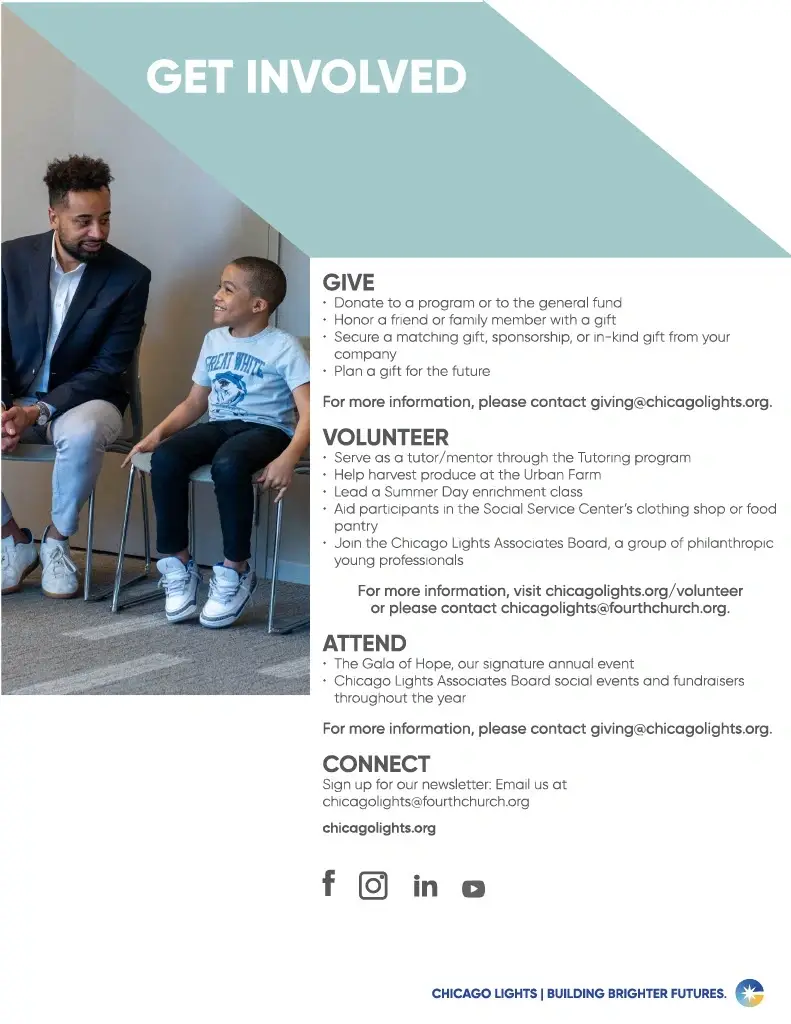
The report highlights opportunities to give, volunteer for, and participate in the organization’s work. It clearly defines the nonprofit’s need and prospective volunteers’ tangible purpose by highlighting specific roles, such as:
- Serving as a tutor/mentor through the Tutoring program
- Helping harvest produce at the Urban Farm
- Leading a Summer Day enrichment class
- Aiding participants in the Social Service Center’s clothing shop or food pantry
- Joining the Chicago Lights Associates Board, a group of philanthropic young professionals
Most importantly, the report ends this list with contact information so readers know exactly how to respond to the invitation. This leads readers from initial awareness of the community’s needs to an actionable next step that can make a difference.
Showcase Real Results
Volunteers are fundamentally driven by the desire to see the tangible impact of their time and effort. Not to mention, appreciation is a key element of volunteer management; according to Kindful, recognizing volunteers’ contributions motivates them to stay involved with your organization in the long term.
Impact reports recognize volunteers by tying community outcomes to their efforts, emphasizing the volunteer's crucial role in achieving the organization's mission by:
- Highlighting volunteer program success metrics: Include data points that specifically measure the volunteer program's impact, such as total volunteer hours served, the number of volunteers recruited, and specific projects completed exclusively by the volunteer team.
- Pairing numbers with narratives: Show the scale of volunteers’ work by combining numerical and descriptive data. For instance, your report might include statements like "Our volunteers contributed 5,000 hours, which allowed us to serve 800 more families this year. Mary’s family was one of these 800, and she says they wouldn’t be where they are today without the generosity of our volunteers.”
- Offering public recognition: Dedicate a section to publicly thanking and recognizing current volunteers. This reinforces their value and signals to prospective volunteers that their time will be genuinely appreciated.
Data analytics might also reveal metrics about the volunteer experience, such as volunteer engagement or satisfaction. This information shows prospective volunteers that their involvement will be more than impactful—it’ll also be fulfilling.
Treating your impact report as a strategic recruitment asset is a surefire way to garner more support. By applying the principles of impact measurement and management, you can articulate the tangible value of every volunteer role and build lasting loyalty through data-backed recognition. Transform your impact report into your most compelling pitch, and watch your organization attract the committed talent it needs to accelerate its mission.
About the Author | Drew Payne is an ardent advocate for education, healthcare, and community advancement, who thrives at the intersection of innovation and impact. As founder and CEO of UpMetrics, an industry-leading impact measurement and management software company, Drew's journey has been defined by his unwavering commitment to helping mission-driven organizations harness the power of their data to drive capital and resources to community.