

Nonprofit
Community Climate Action Day at the Growing Hope Gardens Farm
Details
Description
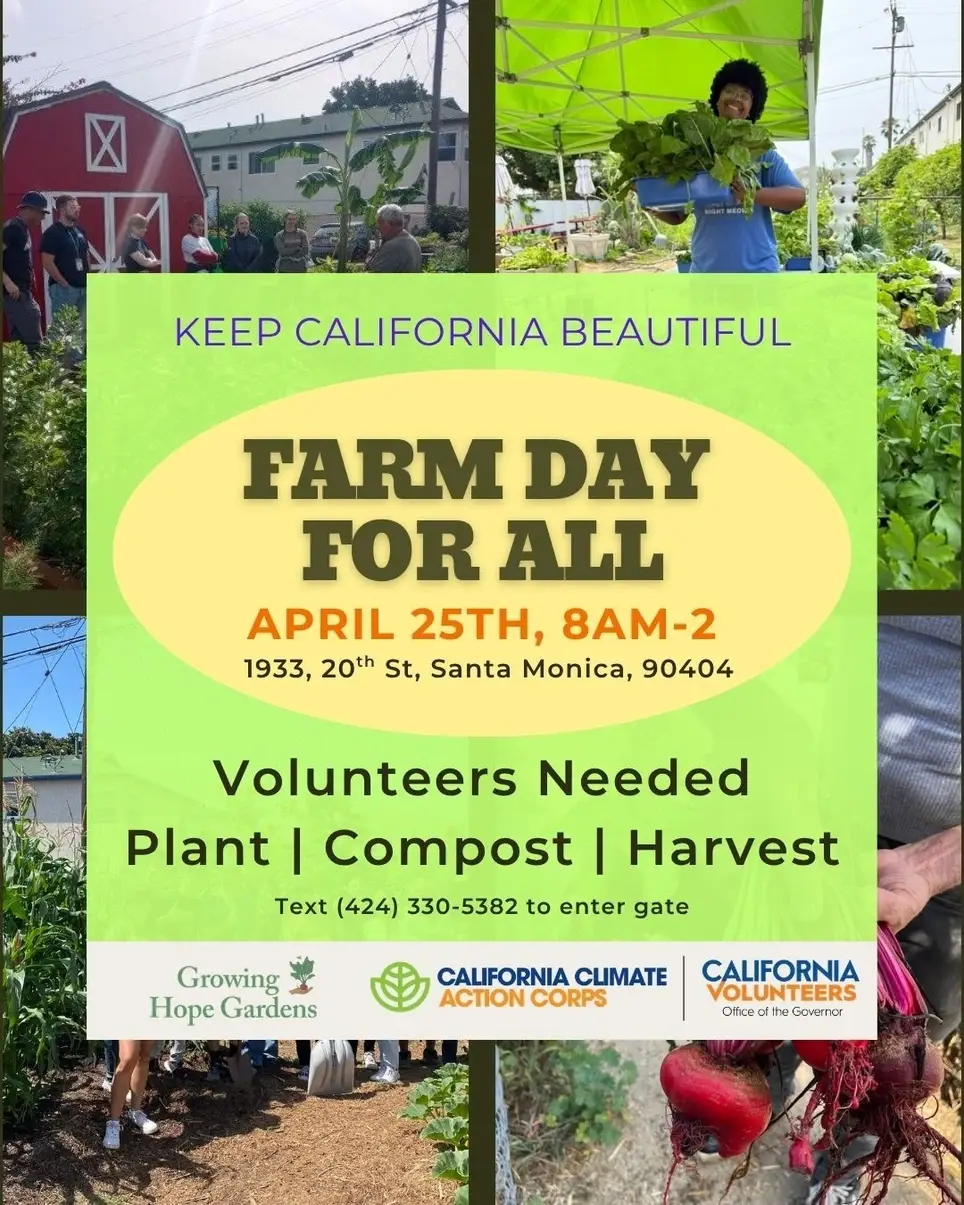
We are hosting a Community Climate Action Day, in partnership with California Climate Action Corps, a program of California Volunteers, Office of the Governor.
Join us at the farm for a day of community, climate action, and celebration, Saturday, April 25th12 AM – 3 PM for a “KEEP CALIFORNIA BEAUTIFUL” event in partnership with @CaliforniaVolunteers and the California Climate Action Corps—a program of California Volunteers, Office of the Governor.
Get your hands in the soil, connect with your community, and be part of building a more sustainable California. We will be harvesting, watering, mulching, flipping the compost, clearing the hydroponic towers, transplanting, painting and pruning at our free urban Farm.
1933, 20th Street, Santa Monica, CA. 90404 TEXT (424) 330-5382 to open the gate.
Together, we’re restoring our soils, strengthening our communities, and taking action for a healthier future.
Location
Growing Hope Gardens Farm
TEXT (424) 330-5382
Directions
Street Parking or at Virginia Park. Bathrooms are there as well.
Please fill out this form
Growing Hope Gardens will host a large-scale volunteer “Super Planting Day” to strengthen community food gardens serving 18 food growing resident communities of affordable housing, bridge housing, and homeless shelters, as well as our educational farm. The project mobilizes 75 volunteers to expand climate-resilient food production while improving soil health, green space, and access to fresh food in underserved communities.
The project focuses on regenerative urban agriculture practices that help address climate change by increasing local food production, reducing food transportation emissions, and improving soil carbon sequestration. By planting seasonal vegetables, herbs, and pollinator-friendly plants, the gardens will produce fresh, nutritious food while supporting biodiversity and healthy ecosystems.
Volunteers will participate in hands-on climate action tasks including planting and transplanting crops, harvesting produce, watering and mulching beds to retain soil moisture, turning compost to build nutrient-rich soil, and beautifying garden spaces with native plants and pollinator habitats. Volunteers will also assist in preparing garden beds, adding compost, and improving soil structure to increase long-term productivity and carbon storage.
These activities help transform underutilized urban spaces into productive green infrastructure that cools neighborhoods, improves air quality, supports pollinators, and strengthens community resilience. The food grown in these gardens directly benefits residents experiencing food insecurity while reducing reliance on long-distance food systems that contribute to greenhouse gas emissions.
Our project builds both environmental resilience and community stewardship while supporting equitable access to fresh, locally grown food."