

Striking A Balance for Success: Ismail Waiswa & Roopal Patel

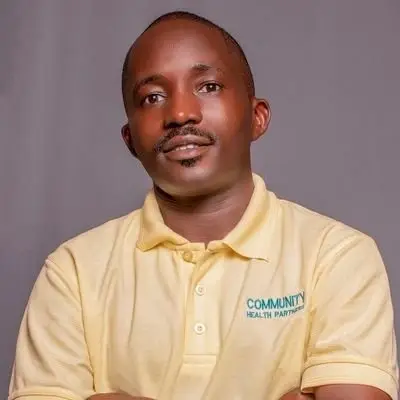
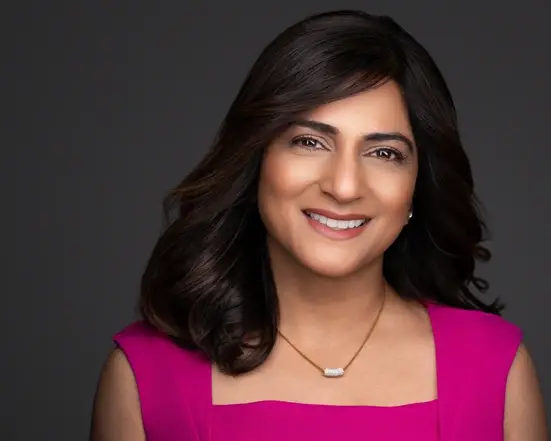
Before founding Community Health Partners, Ismail Waiswa sought to make a difference in Jinja City, Uganda. In particular, he wanted to help vulnerable people, pregnant women, children, and people with HIV and AIDS receive medical care.
He quickly found his focus, forming a small team to identify the obstacles to receiving quality care in his community. He said that the challenges they identified were “high expenses for medical treatment,” the resulting high rate of “self-medication” and “access to affordable facilities.” In the fall of 2023, after learning about the Idealist Action Incubator, he applied to our virtual cohort with the hopes of gaining insight into the bureaucracy of starting and running a community initiative. Soon, Ismail was accepted and began meeting with Angela Bishop, then an Idealist Action Incubator Volunteer Coach, for one-on-one sessions.
During the program, he met his future collaborator, Roopal Patel. Roopal joined our program with an interest in developing an educational foundation for the LGBTQ+ community, specifically for the South Asian population in the U.S. Unfortunately, her efforts stalled due to the current political situation.
“I may have a vision, but that vision has to be executed in a safe environment,” Roopal said. She still wants to continue her work in that space, but she recognizes that she will have to wait until things change at the federal and state levels.
During her participation in our program, Roopal noted that she immediately saw a kindred spirit in Ismail and was excited to help him meet his goals since she has experience in the healthcare field. She shared, “It was an easy fit for me to help him be successful and for him to start a journey.”
Supporting Ismail on the back end meant keeping track of deadlines, organizing files, and ensuring details didn’t slip, effectively keeping track of the more business-oriented aspects of his initiative. She described herself jokingly as the “chip on his shoulder.” Sharing about her experience working with Ismail, Roopal shared, “I am so appreciative of all of the hard work he has put in. I might have supported him from the back end, but he’s the one who was at the front end of his initiative, bringing it where it is.”
In December 2023, Ismail and Roopal registered for community-based organization status, formed a local team, registered a clinical officer, selected board members, and launched the clinic. Ismail described their early days before they had medicine on site: “Our work was basically in the neighborhood where we would invite older women, pregnant women, and children just to do simple things like testing.” He continued, observing that the first few months were “kind of a puzzle” as they sought out additional support from the Busoga Health Forum, which provided them with a platform to showcase their work. With their help, their clinic received its first donation of medicine and free equipment, enabling them to complete the rest of their first year without purchasing medicine.
In 2024, they leveraged their newfound partnership and logistical knowledge to expand care offerings. Ismail said they were providing general healthcare services, malaria treatment, HIV and AIDS testing, and counseling and guidance for patients, as well as informational seminars on prevention measures. Ismail noted with pride that they were, at that point, supporting nearly 500 people in the community.
This year, his clinic received $4,000 over 12 months through a global fund focused on AIDS support by CBOs. He said the funding was framed as an exercise in accountability from the organization: “It's like you're going to learn how to drive, but they say, ‘Before you drive a big car, let us give you a small car and we see how you're going to run it.’ So that's how we ended up getting support from a global fund.”
When asked what advice he would give to people who wanted to start their own community initiative, Ismail replied, “There is motivation and there is passion. For a person to really thrive, they should focus more on their passion because motivation is temporal. If you’re really passionate about achieving something for the people that you serve, for the community that you work for or with, your passion should be your driver and your focus.”
Roopal, before learning this was Ismail’s response earlier in the call, stated that passion will only take you so far and that what one really needs in this space is organization and the management of difficult choices. She said, “Treat your nonprofit as a business. Your passion is one thing, but finding someone to put some sense into your passion is another thing!” Her response made Ismail smile and nod appreciatively. In this way, they complement one another, striking an ideal balance between drive and accountability.
***
Want to hear more stories about people making a difference? Meet Tim, a Syracuse native who has taken active steps to address food insecurity in his community.
John Melendez is a writer and musician based in Brooklyn. His work has appeared in Full Stop Magazine, On The Run, and Bluegrass Unlimited. He is co-author of a biography of jazz trumpeter Kenny Dorham, forthcoming in Spring 2026 from University of Mississippi Press.