

The Best Career Decision I Made Started With Not Knowing What Was Next

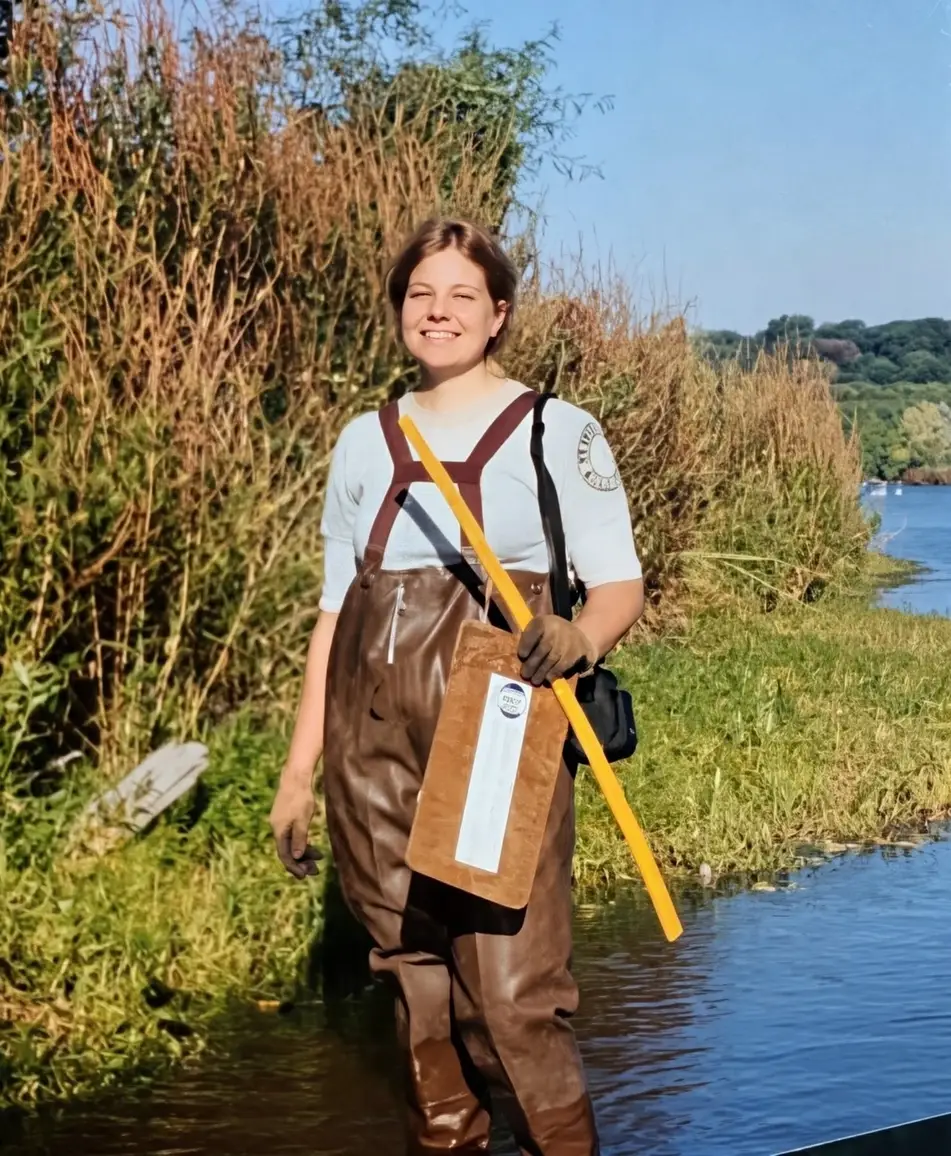
In 2000, I was sitting on a flight back home to South Dakota after spending a semester abroad in Hong Kong, wondering what I wanted to do with my life. I was the oldest girl, and would soon become the first person in my immediate family to graduate from college; and yet, I couldn’t imagine what would come after graduation.
For years, I had planned to go into advertising to use my creative side to design beautiful campaigns that encouraged people to purchase clothing, cars, and other luxury items....but that was no longer what I wanted. Something in me had changed or possibly awakened, and I recognized that time was not infinite.
I wanted to do something that used the time I was putting into work for something that mattered, not just a profession devoted to encouraging consumption.
As I settled into the last leg of my journey, I greeted my aisle mate and asked if he was headed to Sioux Falls for work. He ended up telling me about this incredible life of service, where he partnered with different teams around the country to support natural disaster recovery efforts and food security projects. He was also in his twenties and learning so much about himself, the differences between urban and rural communities, how disaster response worked, and the impact he as an individual had on communities in need.
That conversation changed the trajectory of my life. By the end of the flight, I decided to pursue AmeriCorpsNCCC. For the first time, I realized there was another way to build a career—one centered on service instead of selling products. That realization sent me in an entirely different direction.
What AmeriCorps taught me about leadership and citizenship
In January 2001, in my used emerald Mercury Sable, I set off for Maryland. I was ready to build houses, clean up parks, teach schoolchildren and meet people from around the country.
During that intense year, I worked on the front lines of disaster recovery after Tropical Storm Allison, helping families navigate the complexities of federal disaster assistance through FEMA while also digging into food security and habitat restoration projects. I spent time in Baltimore schools tutoring students, seeing firsthand the challenges they faced. Then came September 11. I found myself in Washington, D.C., training volunteers headed for New York, supporting first responders, and assisting in the response to the anthrax crisis.
One of the things I did not fully understand when I applied to AmeriCorps NCCC was that I was not just signing up to volunteer, but to live alongside people completely different from me and enter communities with humility. In Maryland, I got to know people from every corner of the country; some had grown up in major cities, others in tiny rural towns like mine. Some had college degrees, some did not. Some had joined AmeriCorps because they wanted adventure, others because they were searching for direction…just like I was.
Very quickly, I realized the qualities that really mattered were not the ones I’d stressed about in school. What mattered was:
- Could I adapt?
- Could I do something I had no experience in, and learn as I went?
- Could I live with eleven other people?
- Could I serve people with dignity?
AmeriCorps gave me experiences no classroom could have replicated. We traveled constantly, lived simply, worked long days, and learned to solve problems together. We worked in communities recovering from disasters, supported nonprofits stretched thin, and saw firsthand how much of this country runs because ordinary people quietly choose to help one another.
For the first time, I began to understand service not as charity, but as citizenship.
Rethinking success
That year also fundamentally changed how I viewed success. Before AmeriCorps, success felt tied to achievement, titles, and having a clear trajectory. During AmeriCorps, I met so many people who were deeply fulfilled, living lives centered on community, purpose, and contribution. That shifted something in me.
Ironically, the experience also made me better at many of the things I thought I was walking away from. I learned leadership, communication, public speaking, conflict management, project coordination, and even marketing—all in order to tell the story of a mission in ways that brought people together. The difference was that those marketing skills now had a meaningful purpose attached to them.
Over two decades later, I still see the ripple effects of my decision to spend a year in service to others. At a time when so many young people feel pressure to have everything figured out immediately, national service gives people space to grow while contributing meaningfully to something larger than themselves.
AmeriCorps gave me the time and experience to develop the skills I would later use to build my career. My journey is part of a much larger story about the enduring impact of national service. Service Year Alliance data confirm what I felt in my own life: 71% of service year alums credit that year with helping them discover their true career path.
The long-term impact of AmeriCorps
At 22, I thought I needed a five-year plan to have a meaningful career. AmeriCorps taught me that sometimes movement matters more than certainty.
After my AmeriCorps service year, I knew I wanted to work with others to drive social change. I discovered I had a talent for identifying opportunities to improve systems and bringing people together to make those improvements happen.
Looking back, that year fundamentally shifted the trajectory of my life. Service didn’t just provide a set of experiences for a resume; it provided me with a sense of clarity, purpose, the confidence to take on projects outside my expertise while learning as I went, and a lifelong commitment to the work of strengthening communities.
That foundation led me into a career centered on rural health and nonprofit leadership. Today, I serve as a Senior Business Planner and HRSA Advisor at Southcentral Foundation, where I support 17 rural Federally Qualified Health Centers across the vast landscape of Alaska. When I am home in South Dakota, I remain deeply tied to the land and my neighbors as a farmer, educator, and community advocate.
If there's one thing I would tell today's graduates, it's this: you don't have to have your life figured out. Sometimes the most important step isn't choosing the perfect career—it's choosing the opportunity that helps you become the person you're meant to be.
***
For more stories from AmeriCorps alumni who are still showing up for their communities, still getting things done — check out AmeriCorps Connections Podcast. 100+ conversations with alums navigating purpose-driven work and life after service. Find us wherever you get your podcasts or on YouTube.
About the Author | Laura Swier Kotelman combines experience in healthcare, business strategy, and project leadership to advance innovative rural health initiatives serving communities across remote areas. Whether leading large-scale grant programs or cultivating a garden and apiary, she believes meaningful change starts with curiosity, creativity, collaboration and service.
This post was contributed by a guest author.